
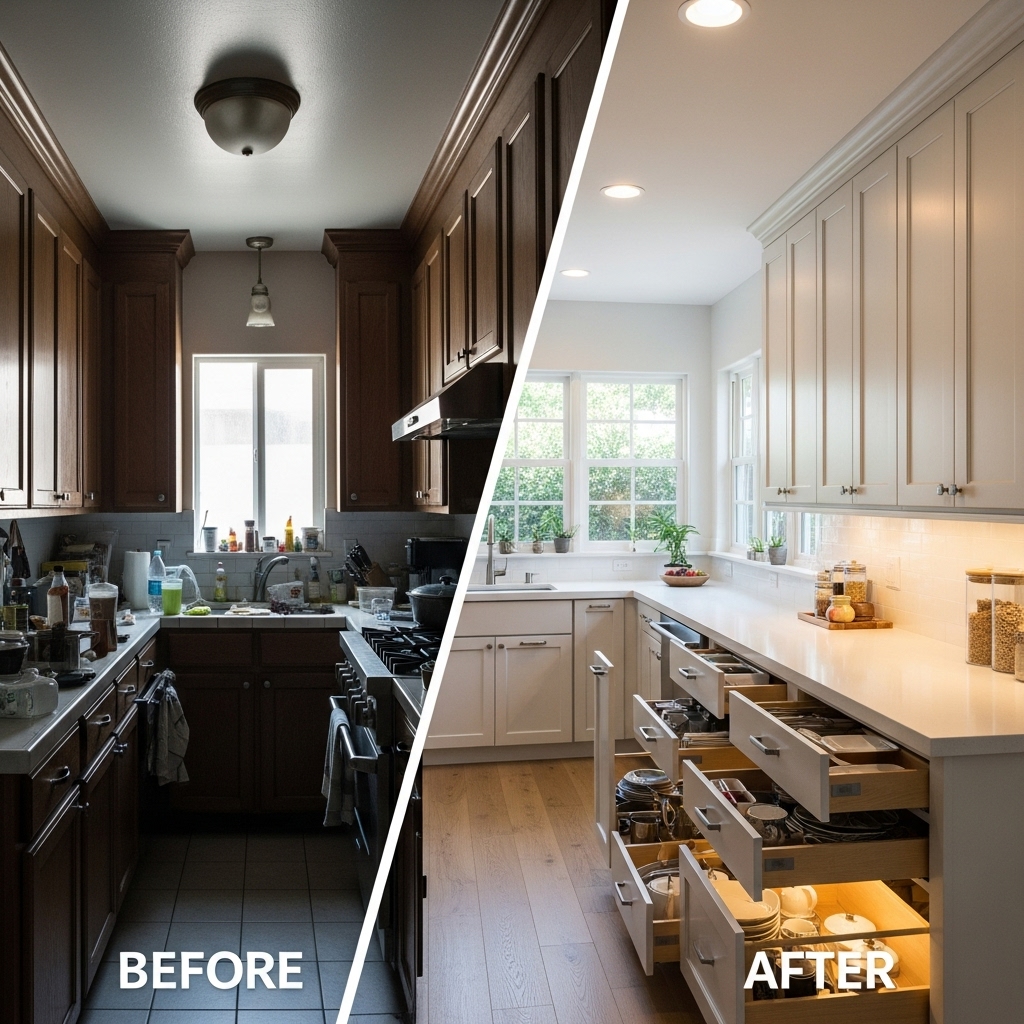
There is a special moment in every kitchen remodel when the room crosses a threshold and starts to feel like the version you dreamed about. In Walnut, California, I have watched that moment arrive in modest ranch houses, split-levels, and tidy townhomes, and it never loses its magic. You see the light stretch farther across the floor. You notice how the island gathers people without crowding them. You reach for a drawer and find exactly what you need. These are the before-and-after experiences that matter—the ones that bring ease to your routines and pride to your home. If you are starting to imagine what your own transformation might look like, exploring local kitchen remodeling perspectives can help you see how different design choices play out in real rooms like yours.
Every “before” tells a story. Often it involves a kitchen that worked for a time but now fights the family’s habits. Maybe there is a traffic jam at the fridge because it sits across from the sink in a tight aisle. Maybe a partial wall cuts off light to the dining area. Perhaps a jumble of cabinet styles from past updates makes the room feel disjointed. These problems are solvable with a sequence of clear decisions that reshape both space and behavior. The “after” is not just new materials; it is a smarter script for how you cook, gather, and clean up.
Before: A Dim Galley in a Mid-Century Ranch
In a single-story ranch near Creekside Park, the kitchen was a narrow galley with low soffits and a pass-through to the dining area. The family loved cooking but felt squeezed for counter space, and the layout created a bottleneck at the range. Upper cabinets blocked the view and hoarded shadow. The refrigerator sat proud of the cabinets, intruding into the walkway, and there was no logical landing zone for groceries or hot pans.
After: We removed a non-structural return, replaced bulky soffits with full-height cabinetry, and introduced under-cabinet lighting to erase shadow lines. A counter-depth fridge integrated with panels tightened the aisle. The sink shifted a modest distance to create one generous prep run between sink and range. Inside the cabinets, pull-out organizers and a tray divider above the oven made previously chaotic storage intuitive. The room felt taller, lighter, and more purposeful, and the family could cook together without stepping on each other’s toes.
Before: A Split-Level with a Chopped-Up Core
In a split-level home tucked along the hills, the kitchen sat between the entry and the family room, separated by a half wall and a narrow cased opening. The cook felt isolated during gatherings, and the dining room received little natural light. Storage was scattered in small, inefficient pieces, and the dated tile counter collected grime in every grout line.
After: We widened the opening to the family room with a flush beam that preserved ceiling height. A peninsula replaced the half wall, providing seating for three and a clear spot for serving. Tall pantry cabinets absorbed the random storage nooks, and the counters switched to a unified, low-maintenance surface. With a layered lighting plan and a few well-placed pendants, the space transformed from segmented to social. The family told us that weekend breakfasts became a favorite ritual, with kids perched at the peninsula chatting while pancakes flipped.
Before: A Townhome Kitchen Short on Personality
In a Walnut townhome governed by sensible HOA guidelines, the kitchen already had a reasonable layout, but it felt generic and cluttered. Appliances were mismatched, and the sink window looked onto a blank wall. The owners wanted warmth, continuity with the living room, and better organization.
After: Instead of chasing dramatic structural change, we focused on refinement. We selected cabinetry with clean lines and a soft, warm finish that complemented the floors in adjacent spaces. A single, gentle backsplash pattern replaced a collage of materials. We added interior organizers to tame pantry items, built a discreet appliance garage, and recentered the sink for symmetry. New lighting cast a glow across the counter rather than spotlighting individual areas, and a subtly framed open shelf held daily dishes. The kitchen did not grow, but it finally felt like it belonged to its owners.
Design Moves That Turn Afters into Everyday Ease
Before-and-after photos capture the big picture, but the best design moves often live in the details. A range placed just far enough from a corner to open up counter workspace changes how you cook. A drawer stack tuned to your most-used utensils and pans reduces unnecessary movement. A quiet vent hood that whisks away steam without drowning conversation lets you enjoy company while you sauté. These details compound into a daily experience that feels almost effortless.
Another detail that makes a notable difference is the rhythm of cabinetry. In “before” kitchens, you often see upper cabinets jumping in height and width, visually cluttering the walls. In a thoughtful “after,” the cabinets align and pace the wall with measured consistency. The eye relaxes, the room feels calmer, and the backdrop lets food, flowers, and people take center stage.
Light as a Transformational Tool
Light might be the most powerful shift between before and after. Removing a bulky valance over the sink, changing a dark backsplash to a soft reflective surface, or adding under-cabinet lighting can brighten the room dramatically. Walnut’s daylight has a warm character that rewards nuanced palettes. When you tune finishes to that light—off-whites with a hint of warmth, natural wood tones, and counters that glow subtly—the entire kitchen participates in the home’s mood. Evening dimmers then transition the kitchen into a cozy, living-room-adjacent space where cleanup does not feel like a chore.
In homes where an opening to the family room makes sense, the after is not just a brighter kitchen; the living space enjoys new vitality too. Sightlines expand. Conversations move more naturally across the rooms. The house begins to feel like a single, coherent environment rather than a series of compartments.
Storage Strategy: From “Where Does This Go?” to “Of Course It Goes Here”
One of the clearest before-and-after shifts happens inside cabinets. In the before, you see mismatched shelf heights, dead corners, and a jumble of containers. In the after, purpose-built zones appear. Baking tools have a home near the mixer. Oils and spices live in a pull-out by the range. Everyday plates are stored at shoulder height, and heavier pots sit in deep drawers with sturdy slides. A small, integrated trash and recycling center keeps the floor clear and the counters clean. When each item has a logical home near where it is used, the kitchen remains tidy with minimal effort.
A shallow, full-height pantry can replace a deep, dark closet that previously swallowed goods. With adjustable shelves and clear containers, you see everything at a glance. This clarity supports better shopping habits and reduces waste. Over time, it quietly saves money and mental bandwidth.
Respecting the House While Refreshing the Kitchen
A successful after respects the house’s architecture. In Walnut, many homes display modest lines and practical proportions. You can add character without overwhelming that foundation. If your home has exposed beams, a subtle echo of wood on the island or in open shelves can tie the kitchen to the rest of the house. If the home’s exterior leans traditional, a cabinet door profile with gentle detail may suit it better than a stark minimalist front. The best afters feel as though the kitchen always belonged, even if it is brand new.
This respect extends to transitions at doorways and flooring. A single continuous floor across kitchen and living areas visually amplifies both rooms. Where transitions are necessary, a careful threshold detail prevents the kitchen from feeling like an afterthought. These moves create a sense of inevitability—like the kitchen found its right shape.
Walnut Logistics: Permits, Structure, and Calm Construction
Before you reach the after, there is the pathway of permitting, structural coordination, and site logistics. In Walnut, many homes on slabs handle plumbing moves differently than those with crawl spaces. If you plan to open a wall, understanding whether it bears load or shear matters. Good teams examine these questions early, plan for inspections, and communicate a clear sequence. Dust control is crucial, especially in open plans where fewer doors separate the kitchen from living spaces. Setting up a temporary kitchen and agreeing on daily schedules keeps life predictable during the build.
Neighbors will appreciate mindful parking and delivery timing on quiet streets. These small courtesies help projects run smoothly and keep the focus on the excitement of transformation rather than the disruption of construction.
Midway through many projects, homeowners find themselves making fine-grain decisions—pendant height, hardware placement, grout color. It is at this point that a steady voice makes a big difference. If you want that kind of support from concept through finishing details, many families consult design-build providers who specialize in kitchen remodeling and know how to turn layered decisions into a coherent whole.
Measuring Success After the Reveal
How do you know if your after is truly successful? Begin by paying attention to how the kitchen behaves at peak moments. On a busy evening, can two people cook and clean without conflict? On a Saturday morning, do you naturally gather in the same places you imagined when you planned the layout? Does the light catch the counters in a way that makes you smile? If the answer is yes, then the design did its job. A beautiful photo is nice. A kitchen that reduces friction and increases joy is better.
Over the months that follow, a well-designed kitchen will reveal additional wins. You should notice that your grocery organization sticks, that your cookware returns to the same places without thought, and that cleanup takes less time. The most gratifying feedback we hear is simple: the kitchen feels calm. That calmness translates to the rest of the home and to the people who live there.
Frequently Asked Questions
Q: How long does a typical kitchen transformation take from design to completion?
A: Timelines vary by scope, but clarity at the start shortens the path. A measured plan, early selections, and quick decision-making keep momentum strong. Coordinated inspections and steady communication minimize downtime between phases.
Q: Do I need to open walls to achieve a dramatic before-and-after?
A: Not necessarily. Many of the most striking transformations come from better lighting, full-height cabinetry, cohesive finishes, and improved storage. Structural changes amplify the effect when they suit the house, but they are not the only path.
Q: How can I keep my kitchen functional during construction?
A: Set up a temporary kitchen with a compact work surface, small appliances, and organized bins for essentials. Plan meal strategies that reduce reliance on the cooking zone. Clear pathways and dust protection make life easier while work proceeds.
Q: What if my kitchen is very small?
A: Small kitchens can deliver exceptional daily performance with the right layout and storage strategy. Prioritize clear prep surfaces, good lighting, and right-sized appliances. Focus on vertical storage and interior organizers to maximize space.
Q: How do I choose finishes that will age well?
A: Aim for a balanced palette that respects your home’s architecture and Walnut’s warm light. Durable, easy-care surfaces and consistent lines create longevity. Use bolder accents sparingly where they can be updated without major disruption.
Q: What is the best way to start if I feel overwhelmed?
A: Begin by writing down how you use your kitchen day to day, what frustrates you, and what brings you joy. That list becomes the backbone of design decisions. A design-build partner can then translate those goals into a clear plan.
If you are ready to see your own before and after come to life, reach out to a local team that understands Walnut’s neighborhoods, listens closely, and guides each step with care. When you want a transformation that feels seamless and considered, connect with experts in kitchen remodeling who can turn your ideas into a room you love to live in every day.