
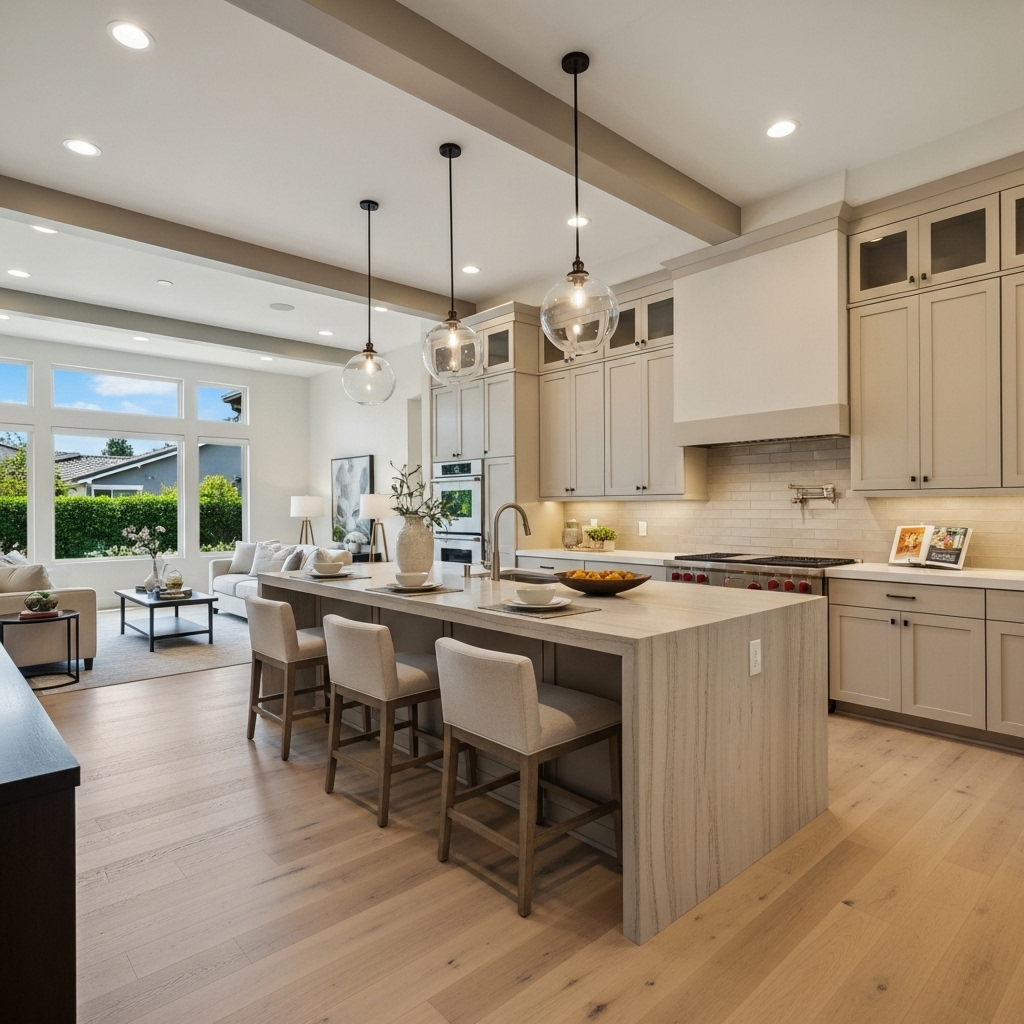
Open concept kitchens appeal to many Walnut, California homeowners because they capture light, connect people across rooms, and make daily routines feel less cramped. Whether you are looking at a split-level from the seventies, a ranch near Creekside, or a two-story home in a cul-de-sac off La Puente Road, the promise of a kitchen that communicates with the living and dining areas is compelling. Still, creating an open plan is not as simple as knocking down a wall. It requires a careful reading of structure, a strategy for storage you might otherwise lose, and an honest look at how you cook, entertain, and unwind. When done well, the result is not just a prettier kitchen, but a home that breathes differently, gathering light and people in a way that feels effortless. If you are evaluating whether this approach fits your house, browsing local perspectives on kitchen remodeling can help you frame priorities and avoid common pitfalls.
Many Walnut houses were designed with distinct rooms—kitchen, dining, living—divided by partial walls or cased openings. These separations made sense for the time, but they can limit sightlines and cast shadows that make the kitchen feel smaller. Modern life, with kids doing homework at the island and friends lingering over conversation while you cook, favors openness. The trick is to open selectively, preserving useful wall space while connecting the spaces that benefit most from shared light and flow.
Reading the Structure Before You Draw the Plan
Before any design sketches, a structural assessment is essential. Some walls are load-bearing or contribute to lateral stability as shear walls. Removing or altering them means engineering a new load path, often with a beam—either dropped or flush—to carry forces safely. In Walnut, where many homes sit on slabs and some perch on gentle slopes, the relationship between beams, posts, and foundations must be thought through carefully. This is routine work for experienced teams, but it demands accuracy. Done well, structural solutions disappear into the architecture, framing openness without calling attention to themselves.
Ceiling continuity is another early decision. If adjacent rooms sit at different heights because of soffits or earlier remodels, you may choose to level the ceiling for a seamless effect. A flush beam can keep that line clean, whereas a dropped beam becomes a design element that can guide furniture placement or lighting. Neither is inherently better; it depends on your goals, budget, and the house’s bones.
Designing Flow and Zones
Once the skeleton is clear, think in terms of zones—cooking, prep, cleanup, and gathering—and then choreograph how they relate. In an open concept, the island or peninsula often anchors the plan. It draws people into the room, offers seating, and provides a generous work surface. Yet in smaller footprints, an island that is too large can clog pathways. Scale matters. Allow comfortable circulation around stools and between the island and perimeter counters. If you cannot fit an island, a peninsula can deliver many of the same benefits, especially if it frames a view or steals light from a nearby window.
Another zone worth planning is the beverage or breakfast center. In open homes, this area becomes a self-serve station for morning routines and evening gatherings, keeping traffic away from the main prep zone. A compact sink, undercounter refrigerator, and organized storage for mugs and glassware make it efficient. Placed along the edge of the kitchen, it allows guests to help themselves without stepping into the cook’s path.
Storage You Will Not Miss—Because You Planned It
Opening a kitchen often costs you upper cabinet acreage. To compensate, increase the efficiency of base cabinets and add tall pantry storage where possible. Full-extension drawers, tray dividers, corner solutions that truly access the back, and well-planned pull-outs make every inch count. A nearby wall that once had a doorway can sometimes convert into a shallow pantry with adjustable shelves. Because open plans put more of your kitchen on display, focusing on concealment matters too. Trash and recycling should be integrated behind doors. Small appliances can live in an appliance garage with pocket doors or in a pantry cabinet with internal outlets.
Think vertically wherever you can. If your ceiling height allows, bring cabinetry upward for display or closed storage. Consider a strategically placed open shelf for daily-use dishes; the key is to curate it so it always feels tidy. When everything has a defined home, the open room stays calm.
Light, Sound, and Air in an Open Plan
Open concept kitchens are as much about sensory experience as they are about sightlines. Light is a major player. Removing walls often lets natural light bounce farther into the home, but it also reveals where supplemental lighting is required. A layered plan—recessed ambient light, under-cabinet task light, and pendants for focal points—gives you control throughout the day. Dimmers allow a soft transition from busy afternoon cooking to a relaxed evening atmosphere.
Sound is the other side of the coin. Without walls to absorb noise, the hum of conversation, clinks of dishes, and mechanical sounds of appliances can travel. Choosing a quiet dishwasher and a ventilation hood with strong performance at lower settings pays off. Soft materials—area rugs in adjacent spaces, upholstered seating, drapery—help absorb sound without changing the kitchen itself. Planning stool placement a comfortable distance from the primary prep zone also prevents congestion and chatter right where you need concentration.
Ventilation That Does Not Dominate
In a closed room, odors can linger. In an open plan, they can drift. Effective, quiet ventilation is essential, especially if the range sits on an island. If you prefer a clean sightline, consider a low-profile ceiling-mounted hood paired with adequate capture area, or a downdraft system if your cooking style allows. If a wall location makes more sense for the range, a thoughtfully designed hood can become a sculptural element that anchors the kitchen visually. Either way, the goal is fresh air without a constant roar.
In California, energy standards influence lighting and ventilation choices. Working with someone who knows how to satisfy requirements while maintaining a cohesive design will simplify approvals and yield a better result. In Walnut’s sunny environment, integrating natural light with efficient electric lighting provides the best of both worlds.
Materials and Color in a Shared Space
Because an open kitchen spills into living and dining areas, material choices ripple beyond the cook space. Many homeowners prefer a continuous floor surface for visual unity. If you choose wood or a wood-look material, coordinate tone with adjacent rooms to avoid abrupt shifts. Cabinet finishes should harmonize with nearby furniture; you might choose a restrained palette for the majority of the kitchen, then use color or texture sparingly on the island or backsplash to create a focal moment.
Countertops in an open plan work hard. They must endure daily use while looking good from multiple angles. Think about how surfaces will read from the sofa or the entry. A consistent, gently patterned counter often complements a broader range of decor and keeps the room feeling calm. If you love dramatic stone, isolate it in a way that feels intentional—perhaps as a backsplash behind the range—so it reads as an artful feature rather than a busy backdrop.
As you compare options, it helps to map how the space will live in real time. Morning sunlight, afternoon homework, weekend gatherings, and quiet evenings all have different rhythms. If you want help visualizing those scenes and turning them into a buildable plan, consider a consultation with a local team experienced in kitchen remodeling that balances design sensitivity with construction know-how.
Islands that Earn Their Keep
In open concept layouts, the island often becomes the heart of the home. Make it do more than one job. Seating on one side, prep and cleanup on another, and storage tucked all around allows the island to support multiple users. Outlets positioned discreetly support laptops and small appliances without cords stretching across walkways. If space allows, a slight overhang creates comfortable knee room without making the island feel bulky. Scale the pendant lights so they frame rather than overwhelm; they should glow, not glare.
When space is tight, do not force an island. A peninsula can define the kitchen edge, provide seating, and preserve open circulation to the living area. With thoughtful detailing, it can look built-in and elegant rather than simply “the end of the cabinet run.”
Walnut Context: Neighborhood Patterns and Practical Tips
Walnut’s neighborhoods bring their own subtleties. On hillside lots, capturing views may be more important than adding upper cabinets. In ranch houses with long rooflines, structural beams sometimes prefer a certain span or direction, guiding how you open the room. In townhomes, HOA guidelines and shared walls add a layer of coordination. In each case, the concept remains the same: open thoughtfully, store efficiently, and let light lead the way.
Parking and delivery logistics matter too. Walnut’s quiet streets are part of its charm; planning where materials will be staged and how crews will access the site keeps the process respectful of neighbors and smooth for you. Clear communication about working hours and dust protection preserves sanity in an open house where fewer barriers exist between the jobsite and your daily life.
Frequently Asked Questions
Q: How do I know if a wall can be removed?
A: A site visit and structural assessment will determine whether it is load-bearing or a shear component. If it is structural, a beam and possibly posts can carry loads safely. The design decision is how to integrate those elements cleanly so they feel intentional.
Q: Will I lose too much storage with an open plan?
A: Not if you plan ahead. Increase base cabinet efficiency, add tall pantry storage, and reserve a wall or niche for utility functions. Thoughtful interior organizers often outperform a run of cluttered uppers.
Q: What about cooking smells and noise?
A: Quiet, effective ventilation and a well-chosen dishwasher go a long way. Soft materials in adjacent rooms help with acoustics. Planning seating just outside the main prep lane keeps conversation nearby but not in the way.
Q: Do open kitchens work in smaller Walnut homes?
A: Yes, provided circulation is protected and storage is designed intelligently. A well-scaled island or a peninsula can deliver connection and function without overcrowding. Sometimes a larger cased opening is enough to bring in light and sightlines.
Q: How do lighting decisions change with openness?
A: You will rely more on layered lighting—ambient, task, and accent—with dimmers to tune mood. Pendants become both functional and decorative, guiding the eye and anchoring the island or peninsula within the larger room.
Q: What is the best way to start planning?
A: Begin with a clear list of goals: what you want to see, how you want the room to feel, and how you move through daily routines. A measured plan and an early structural read will show what is possible and where the sweet spots are.
If you are ready to make your home brighter, more connected, and easier to live in, the next step is a conversation with people who can translate your vision into a safe, buildable plan. Choose a partner who understands Walnut’s homes and takes the time to coordinate structure, storage, lighting, and finishes with care. When you want a guide from concept through construction, reach out for thoughtful, locally informed kitchen remodeling support that turns an open concept into a daily pleasure.